
PHYSICAL FORMAT · HUMAN SYSTEMS · PROTOTYPE
Field Assembly
People do not gather around a personality. They gather around an unfinished problem.
A small real-world gathering where eight to twelve people from different backgrounds investigate one practical question.
One object is placed in the middle of the room. Ninety minutes later there is a written record of what was observed, what was disputed and what must be tested next.
- Not a conference.
- Not networking.
- Not a podcast audience.
- Not a startup pitch night.
- No compulsory photographs.
No pitches. No panels. No spectators. Everyone touches the problem.
The room
One room. One object. One question.
A library room, a workshop, a café after closing, a college, a farm, a warehouse or a community building.
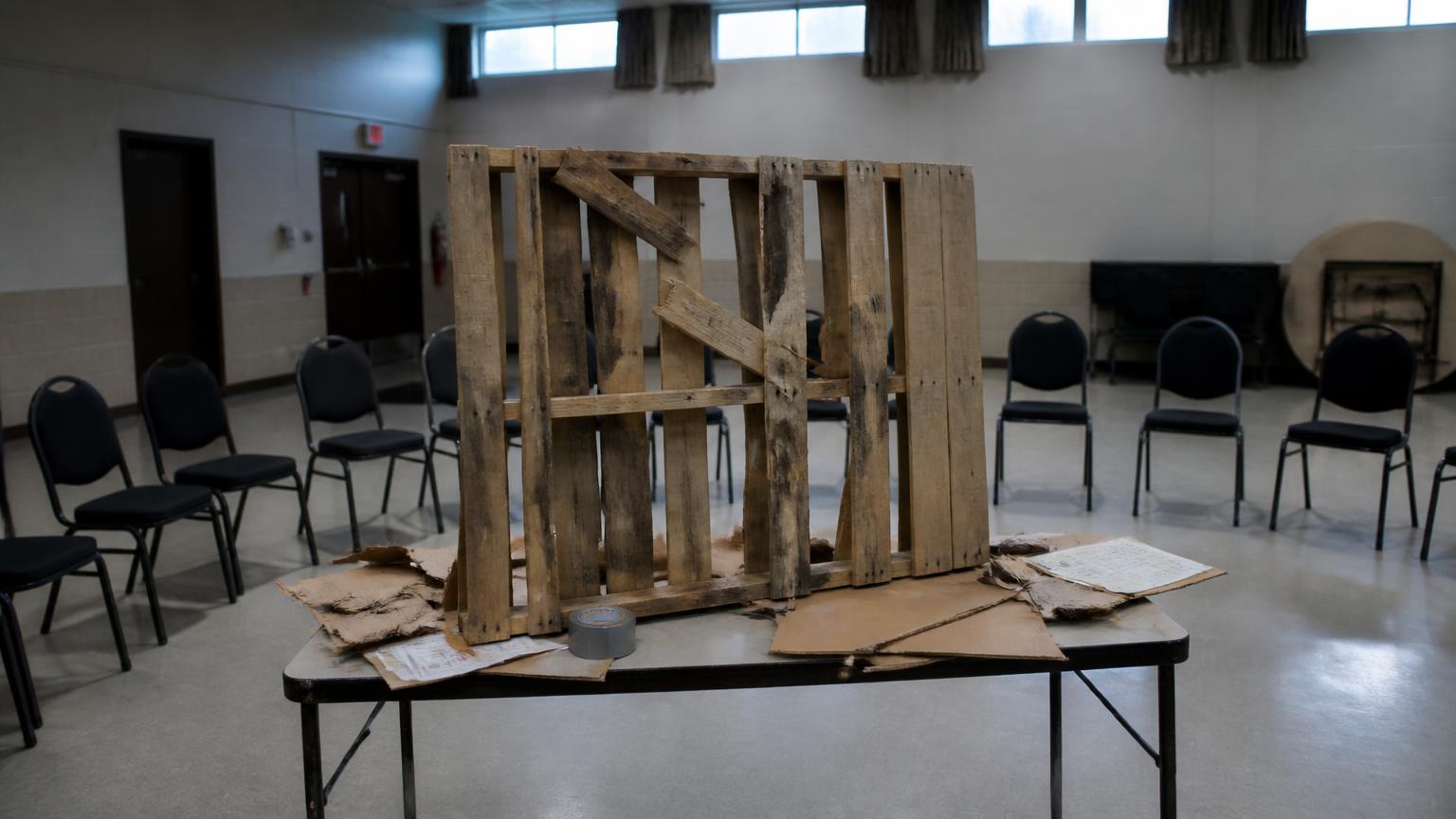
Something real is placed in the centre. Everyone can reach it, turn it over and take it apart.
- A damaged pallet
- A disposable toothpaste tube
- An empty IBC
- A mobile-phone package
- A restaurant menu
- A delivery note
- A failed household object
- A map of an inaccessible journey
- A component from an electric van
Ninety minutes
01 · 20 min
Observe
What is actually happening — not what we assume is happening?
02 · 20 min
Disassemble
Which parts of the current system cause waste, frustration, cost or exclusion?
03 · 15 min
Question
What would have to be true for this problem to disappear?
04 · 25 min
Make
Use cardboard, paper, tape or the objects on the table to make the smallest representation of an alternative.
05 · 10 min
Prove
Decide what must be tested in the real world next.
The output
Every Assembly produces a public Field Record.
- The question.
- What was observed.
- What participants disagreed about.
- A photographed prototype, with permission.
- Unproven assumptions.
- The next experiment.
- What would cause Quinn Labs to stop.
The record is published on this website. The website is the archive. The work happens in the room.
Privacy is part of the format
Nobody is turned into marketing material.
- No filming by default.
- No compulsory group photograph.
- No attendee list published automatically.
- Participants decide their attribution — full name, initials or publicly unnamed.
- Objects and hands are photographed only with consent.
- Notes describe contributions without exposing private lives.
- No follower counts and no status-heavy introductions.
This is Project Nameless made physical rather than philosophical. Read Project Nameless
FIELD ASSEMBLY 001
Where does the pallet go?
A real damaged pallet in the centre of the room.
The outcome is not to solve UK pallet waste in an evening. It is to map where ownership and responsibility disappear, then design the first twenty-pallet Load Passport pilot.
Nine chairs
01
A driver
02
A warehouse operator
03
A pallet repairer
04
A small manufacturer
05
A waste operator
06
A packaging designer
07
A materials student
08
Someone receiving palletised deliveries
09
Someone who knows nothing about logistics and asks the obvious questions
One evening near Frodsham, Runcorn, Liverpool or Manchester.
Ten people. One pallet. Ninety minutes. One next experiment.
Feeds directly into The Invisible Pallet, the Pallet Index, WasteProof and Load Commons.
Four kinds of gathering
In preparation
Field Assembly
Investigate one real-world problem.
Format exists online
Proving Room Live
Subject an idea to five rigorous perspectives.
Proposed
Repair Evening
Understand, repair and document failed objects.
Proposed
Open Bench
Let someone bring a difficult problem into the laboratory.
The Proving Room already runs online. Try the five positions
Why attend
Not community. Something concrete.
- Bring a problem that annoys you.
- Learn how an unfamiliar system actually works.
- Meet people outside your normal profession.
- Handle and investigate real objects.
- Help create an experiment.
- Leave with a documented contribution.
- No expectation to promote yourself online.
What accumulates
The event is copyable. The accumulation is not.
- A repeatable investigation method.
- A growing archive of Field Records.
- Relationships across trades, research and communities.
- Physical prototypes created from observed problems.
- Longitudinal evidence showing what progressed and what failed.
- A network of people contributing expertise without needing public profiles.
- Commercial pilots emerging from community questions.
Organisations may eventually commission a private Field Assembly around packaging, transport, waste, food or operational friction.
Ten people. One pallet. Ninety minutes.
No headquarters. No national movement. One evening in the North West, then a published record of what we found.
Field Assembly 001 has no date yet. Tell us which chair you would take and we will contact you when it is scheduled.
The internet records the work. The work happens in the room.