
Logistics Research · Question
Load Commons
Can every logistics asset have another journey waiting before its current journey ends?
Pallets, IBCs, cages and stillages move goods for a living, then quietly become somebody's disposal problem. Replacing the material with something labelled compostable does not change that. It changes what the waste is made of.
Load Commons is a research programme into circulation: identity, ownership, condition, repair and return-leg economics. The physical invention comes after the evidence, not before it.
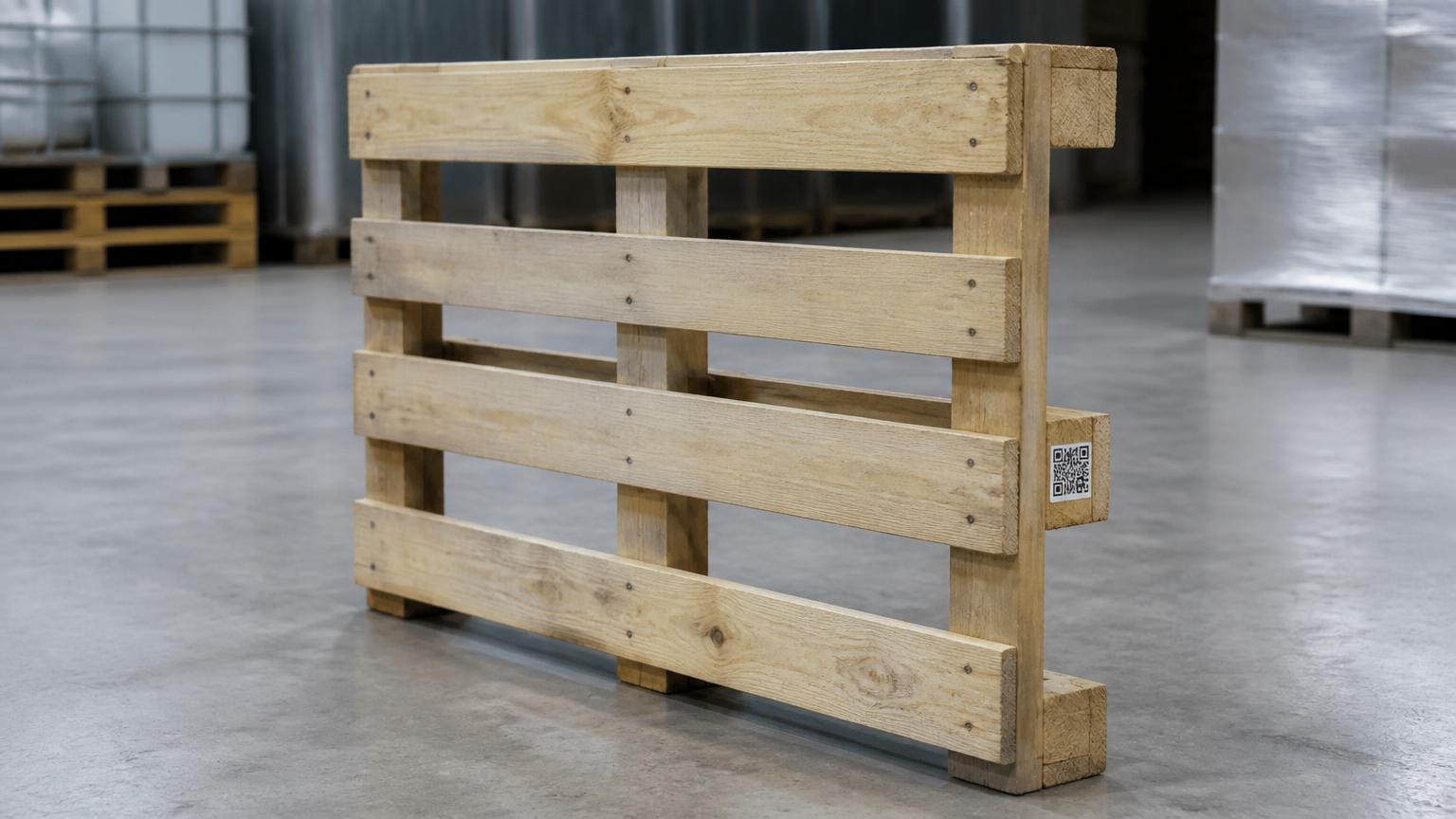
The genuinely ecological answer is a circulation system, not a different material.
The complete system
Six components. None of them is a new material.
Invisible Pallet
Pallets circulate instead of becoming waste.
Invisible means the pallet still carries the load but disappears as waste, lost property and return-leg friction.
EverIBC
Modular, inspectable and repairable intermediate bulk container.
An IBC maintained like industrial equipment, not discarded like packaging.
Load Passport
Identity and complete asset history.
Ownership, condition, journeys, contents and repairs, recorded against a permanent identifier.
Pallet Index
Maps surplus, shortages, value and demand.
Where assets pile up, where they run short, and what that imbalance costs.
Corridor
Finds efficient movement and return opportunities.
Empty vehicles returning assets instead of dedicated collection journeys.
WasteProof
Verifies repair, reuse and responsible retirement.
Evidence that an asset was repaired, reused or separated properly at end of life.
Component 01
The Invisible Pallet
The pallet still supports the load, but disappears as waste, lost property and return-leg friction.
Physically palletless transport
Slip sheets, lifting rails and vehicle-integrated platforms can also be researched. Each requires compatible warehouse equipment at both ends, which is the reason adoption stalls. The larger opportunity is making different systems interoperable rather than declaring one winner.
What the system would combine
- 01Durable, repairable and nestable pallets.
- 02A permanent QR or RFID identity.
- 03Recorded ownership, condition, journeys and repairs.
- 04Deposits settled between companies.
- 05Local collection and repair hubs.
- 06Empty vehicles returning assets instead of dedicated collection journeys.
- 07A marketplace matching surplus pallets with nearby demand.
- 08Verified recycling only when an asset is beyond repair.
The compostable IBC problem
A fully compostable IBC is probably the wrong objective. A container designed to decompose can conflict with the duties an IBC has to perform.
Compostability is also meaningless unless the contaminated container has an actual permitted composting route. A label is not an outcome.
An IBC must survive
- Hundreds of litres of weight.
- Forklift impacts and stacking.
- Weather and long storage.
- Leakage and chemical exposure.
- Cleaning and repeated transportation.
- Potentially strict dangerous-goods requirements.
Component 02
EverIBC
An IBC maintained like industrial equipment — not discarded like packaging.
A compostable or bio-based liner might eventually work for specific non-hazardous materials. It would need barrier, contamination, transport, composting and lifecycle testing first. That is a research stream, not an environmental claim.
What it could have
- Permanent repairable outer cage.
- Replaceable base, valve and corners.
- Long-life inner bottle.
- Digital contents and contamination history.
- Defined cleaning grades.
- Inspection and recertification.
- Manufacturer-neutral component standard.
- Verified material separation at final retirement.
First pilot
The first pilot needs no new manufacturing
01
Tag twenty existing pallets
Permanent identifiers on assets already in circulation. No new tooling, no new material.
02
Record every transfer
Who holds it, where it went, what condition it arrived in, what it carried.
03
Attempt to keep them circulating
Use return legs, local hubs and nearby demand instead of disposal.
04
Publish what broke
Losses, refusals, damage, settlement disputes and the journeys that never balanced.
That evidence would reveal what physical invention is actually necessary. Until then, any new pallet design is a guess with a mould behind it.
Not yet tested by Quinn Labs
What the pilot would have to answer
- Whether deposits can be settled between companies without a trusted intermediary.
- Whether return legs exist in the volumes the model assumes.
- What proportion of assets are lost rather than damaged.
- Whether repair is cheaper than replacement at current timber and resin prices.
- Whether contamination history can be recorded honestly by the people handling the asset.
- Whether any composting route exists for a container that has held a commercial product.
Quinn Labs has not built a pallet, an IBC or a circulation network. Load Commons is a research position and a proposed pilot. No environmental, recyclability or compostability claim on this page has been tested by Quinn Labs.
Related work
Grand Challenges
Where NoPack and the material questions sit.
The Last Tube
NoPack is not necessarily no container.
Reality Experiments
What has actually been built.
Open Challenges
Problems handed to anyone who wants them.