
Food Research · Status: Question
Project Unsweetened
Can food taste complete without added sugar or sweeteners?
Manufacturers usually remove sugar and then replace its sweetness. Very few ask whether the product needed to taste sweet at all.
Project Unsweetened is a research question about the second option: building satisfaction from acidity, bitterness, umami, fermentation, aroma, fat, texture and heat instead of substituting one sweet thing for another.
We didn't replace the sugar. We replaced the need for it.
What the rule would mean
For this research question, a formulation would exclude:
- Added sugar, syrups, honey or fruit-juice concentrate used for sweetness.
- Stevia, sucralose, aspartame or other high-intensity sweeteners.
- Sugar alcohols such as erythritol or xylitol.
- Dates or fruit purées quietly functioning as replacement sweeteners.
What would remain
Naturally occurring sugars in whole ingredients — tomatoes, onions, carrots, oats, fruit and milk alternatives all contain them.
Those sugars would be declared honestly on the nutrition panel rather than hidden behind a claim.
Designed without added sugar or sweeteners. Naturally occurring sugars may remain.
Where flavour would come from instead
01
Acidity
Vinegars, citrus, tamarind and ferments to create lift where sweetness normally sits.
02
Bitterness
Used deliberately and in proportion, so flavour has an edge to resolve against.
03
Umami
Tomato, mushroom, miso, seaweed and yeast extracts as the depth layer.
04
Fermentation
Time as an ingredient: complexity that cannot be added from a jar.
05
Herbs and aromatics
Rosemary, thyme, cumin, pepper — aroma carries perceived satisfaction.
06
Toasting and roasting
Maillard development from the ingredients already present, not added sugars.
07
Fat and mouthfeel
Seed and nut fats to carry aroma and lengthen the finish.
08
Salt, used responsibly
Within sensible limits, and never as a straight swap for the sugar removed.
09
Texture and temperature
Crunch, chew, density and serving temperature all change how complete a food feels.
QL-Food 001 — first study
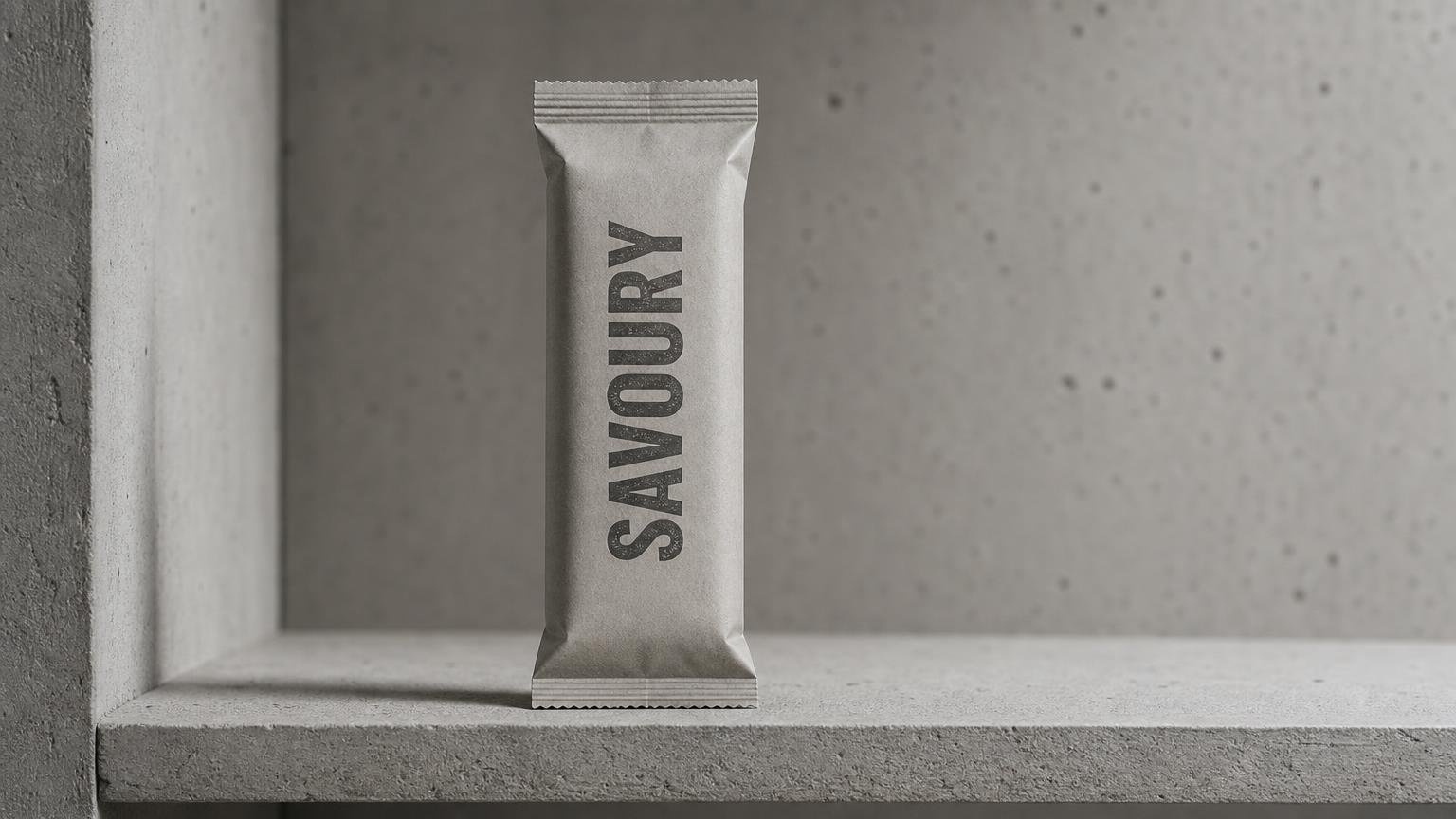
The Savoury Field Bar
Why does almost every bar drift towards dessert?
The first study would be an adult savoury snack bar: something eaten while driving, walking or working, where the current shelf offers little that is not sweet.
The intent is properly savoury, not 'less sweet'. These are research directions, not finished recipes.
Research direction — not a product, recipe or formulation
Ingredient directions
- Oats
- Pumpkin and sunflower seeds
- Tomato
- Smoked paprika
- Rosemary
- Nutritional yeast or miso for umami
Constraints
- No added sugar
- No sweeteners
- Vegan formulation
- Savoury by design, not by subtraction
Possible variants
- Tomato, rosemary and black pepper
- Mushroom, thyme and miso
- Carrot, cumin and seed
- Pea, mint and lemon
- Beetroot, horseradish and oat
Direction only. No recipe, quantity or method is published here, and nothing on this page should be used to make food at home.
What must be proven
Sensory testing that satisfaction holds without added sweetness
Not yet tested by Quinn Labs
Shelf life and water activity
Not yet tested by Quinn Labs
Allergen control and labelling
Not yet tested by Quinn Labs
Nutritional composition, verified by analysis
Not yet tested by Quinn Labs
Manufacturing and food safety at scale
Not yet tested by Quinn Labs
Cost per unit against existing savoury snacks
Not yet tested by Quinn Labs
Whether people actually repeat-buy a savoury bar
Not yet tested by Quinn Labs
Compliance with UK nutrition and health claim rules
Not yet tested by Quinn Labs
The Flavour Architecture Library
The defensible asset would not be one bar. It would be the evidence: how combinations of acid, aroma, umami, bitterness, fat and texture create satisfaction without added sweetness.
Held as a structured library, that evidence could inform reformulation far beyond snacking — and could eventually operate as a research and formulation service for manufacturers rather than another food brand.
- Breakfast foods
- Snacks
- Sauces
- Drinks
- Plant-based foods
- Children's products
- Institutions and hospitality
Proposed research asset — no library has been built yet
Careful with the wording
In the UK, a 'sugar-free' claim generally requires no more than 0.5 g of sugars per 100 g or 100 ml. A 'no added sugars' claim requires that the product contains no added sugars or ingredients used for their sweetening properties, and where sugars occur naturally, a further statement may be required.
So Quinn Labs states the position plainly: designed without added sugar or sweeteners, naturally occurring sugars may remain.
Language we avoid
- 'Completely natural' as a headline — vague, and close to an unproven health halo.
- Any implication that this is healthier until nutritional analysis exists.
- Any dental, medical or weight claim.
Research response prototype
What would make you buy a savoury bar instead of a sweet one?
Nothing is submitted or published. Your selections stay in this browser tab.
Where this sits
Reality Drinks investigates unsweetened drinking. Project Unsweetened asks whether an entire food category can stop expecting sweetness.
GRAND CHALLENGES
Which problems are big enough to matter?
HUMANITY'S QUESTIONS
What is humanity still asking?
THE NOT YET LIST
What is not possible yet?
We didn't replace the sugar.
We replaced the need for it.
Quinn Labs · Building tomorrow’s obvious ideas.