
Project Seed
Can we identify the plants most likely to survive tomorrow's climate?
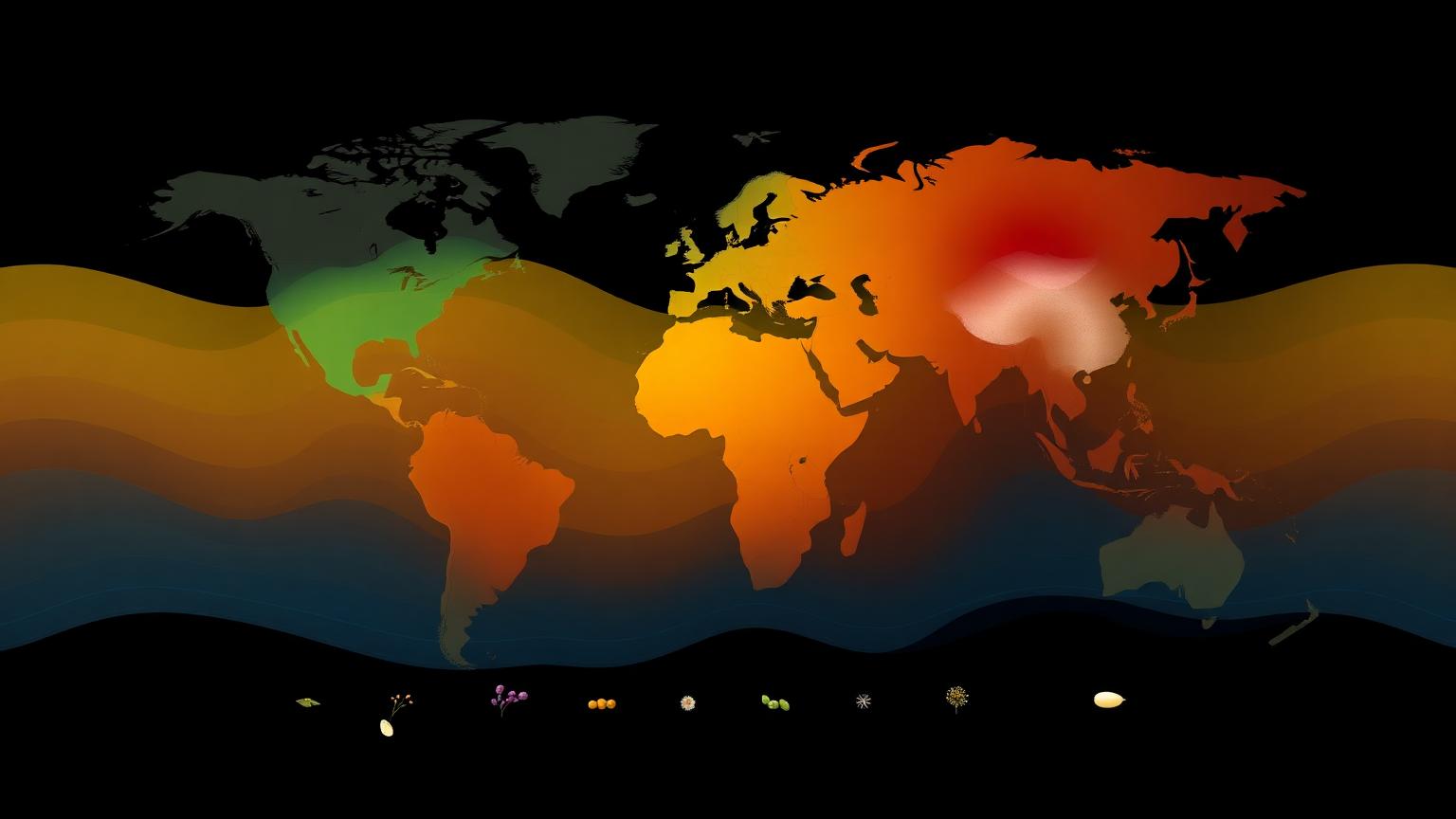
Match varieties to the climate a place is heading for, not the one it had.
QuestionThe problem
Planting advice is written from historical averages. Gardens, farms and street trees are being planted today for conditions that will not exist in twenty years.
What we built
Match varieties to the climate a place is heading for, not the one it had.
Where it is now
Concept — establishing whether the variety data is consistent enough to compare at all.
Research questions
- Can we identify the plants most likely to survive tomorrow's climate?
Future concepts
Research only. These are not existing features.
Who it's for
Components
Research question
“Can we identify the plants most likely to survive tomorrow's climate?”
Why this matters
Planting advice is written from historical averages. Gardens, farms and street trees are being planted today for conditions that will not exist in twenty years.
Current progress
Concept — establishing whether the variety data is consistent enough to compare at all.
Workflow
Question
Can we identify the plants most likely to survive tomorrow's climate?
How it could work
Problem
We plant for the climate that has already gone.
Current world
Hardiness advice based on decades-old averages, and a label that says full sun.
Quinn Labs idea
Match variety to projected conditions for that specific place, and keep updating from real outcomes.
Potential future
Planting decisions made for 2050 rather than 1990.
Research board
Data quality
Tolerance is described in marketing language, not measurements. That is the first problem to solve.
Open questions
Whose projection?
Different climate scenarios give different answers. Which one do you plant against, and do you say so?
Future possibilities
Research directions only. None of these exist, and some never will.
Questions we're asking
- Can we identify the plants most likely to survive tomorrow's climate?
- Variety databases joined to downscaled climate projections
- Drought and heat tolerance recorded consistently across catalogues
- Regional recommendations that shift as the zone shifts
Potential collaborators
Related projects
Question
Project Bloom
Make it obvious what to plant, and when, so ordinary gardens add up to a corridor.
Research
Project Canopy
Put the next tree where it does the most work — for heat, for flooding and for air.
Pilot
One Fleet
Decision intelligence for commercial fleets.
Prototype
WasteProof
Material intelligence for the moment of disposal.
Research
Furniture DNA
A digital assembly layer for physical objects.
We prototype possibilities. Not every question has an answer. Every answer begins with a question.
Similar problem in your business?
Tell us what you're trying to solve. We'll say whether it's worth building.
Start a project