
Test
Same phone, same spot
Position and microphone matter more than model accuracy. Repeatability is the whole experiment.
Can buildings explain how they use energy?
Project Echo · Research Prototype
Project Echo explores whether sound can help people understand the health of vehicles, equipment and infrastructure before failures become obvious.
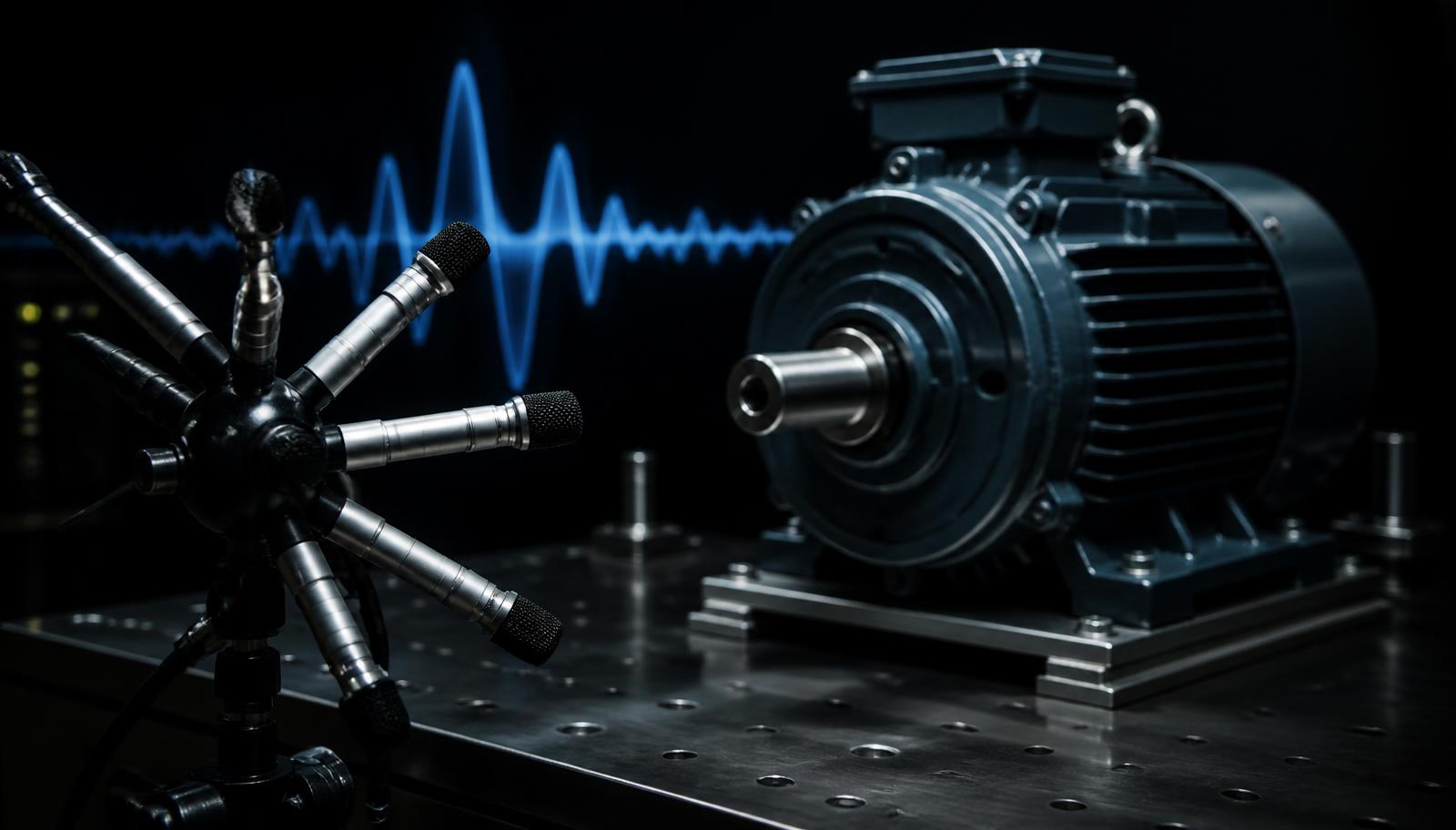
What if every machine knew what it was supposed to sound like?
PrototypeThe question
What if every machine knew what it was supposed to sound like?
Project Echo explores whether vehicles, machines and everyday equipment can build an acoustic fingerprint of their own health. Instead of waiting for something to fail, could subtle changes in sound reveal problems much earlier?
Can sound become an early warning system for the physical world?
Echo does not try to identify what a machine is, or name a fault from a library. It asks a smaller, harder question: has this machine changed?
Research areas
Concept experience
Imagine pointing your phone towards a machine.
Instead of identifying music, it compares today's sound with the machine's own historical fingerprint.
“Rear wheel bearing noise has gradually increased over six months.”
“Left door speaker response is significantly lower than previous recordings.”
“Cooling fan vibration has changed.”
Illustrative research concepts. Not current capabilities.
The sound timeline
Every recording becomes part of a historical record.
Future research
Exploration only. Not current capabilities.
Why it matters
Machines rarely fail instantly.
Most change gradually.
Project Echo explores whether those changes can be recognised earlier through sound, helping people understand equipment before problems become more serious.
Research card
Can every machine develop an acoustic fingerprint?
Future possibilities
Research only. None of these exist today.
Every machine tells a story.
Project Echo explores whether we simply need to learn how to listen.
Research question
“Can every machine develop an acoustic fingerprint?”
Why this matters
Machines rarely fail instantly. Most change gradually, and the change is audible long before it is obvious.
Current progress
Research prototype — recording method and fingerprint stability under test on motors and vehicles.
Workflow
Prototype
Repeat recordings of the same machine, compared against its own fingerprint.
How it could work
Problem
A machine degrades gradually and nobody hears it until it fails.
Current world
Fixed service intervals, or a person who happens to notice a noise.
Quinn Labs idea
Record the machine regularly and compare it with its own past, not with a catalogue of faults.
Potential future
Equipment that raises its hand early, in plain language.
Research board
Position and microphone matter more than model accuracy. Repeatability is the whole experiment.
Cold starts, load, weather. Most change is meaningless — separating it is the hard part.
Industrial vibration monitoring is decades old. Untested at phone-in-pocket scale.
Open questions
Changed, not broken
The question is not what fault this is. It is whether this machine has changed.
Future possibilities
Research directions only. None of these exist, and some never will.
Questions we're asking
Potential collaborators
Related projects
Question
Project Grace
Technology that makes people slightly more human.
Research
Project Evolution
What if evolution never stopped?
Prototype
Project Oasis
Give every plant a way to say when it is thirsty, from a windowsill pot to a commercial glasshouse.
Research
Project Harvest
Turn satellite, weather and soil signals into a short list of what will go wrong in a field next week.
Research
Project Root
Turn soil from an invisible asset into something a grower, a council or a buyer can actually read.
We prototype possibilities. Not every question has an answer. Every answer begins with a question.